In the fast-evolving world of logistics, companies face growing pressure to reduce costs while maintaining service quality. With complex delivery networks and changing customer expectations, finding the right balance between efficiency and performance has never been more critical. By adopting smarter technology and operational changes, companies can drive down expenses and boost reliability at the same time.
Here’s a look at four strategies that can help companies significantly reduce logistics costs while improving efficiency, transparency, and customer satisfaction.
Optimize Delivery Routes to Maximize Efficiency
Poorly planned routes, underutilized vehicles, and operational inefficiencies can drain budgets and delay deliveries. Route optimization offers one of the most direct paths to increased cost savings and operational efficiency. Optimizing routes reduces distance driven, idle time, and time in-transit, lowering fuel, maintenance, and driver costs while improving on-time delivery performance. Route optimization software can analyze real-time data such as driver availability, vehicle capacity, and delivery time-windows to create the most efficient delivery routes possible. Unlike manual planning, which can take hours and rely heavily on guesswork, these systems can adapt instantly to disruptions, rerouting drivers when needed to minimize idle time, reduce mileage, and ensure timely delivery.
Consolidate Deliveries to Optimize Resource Utilization
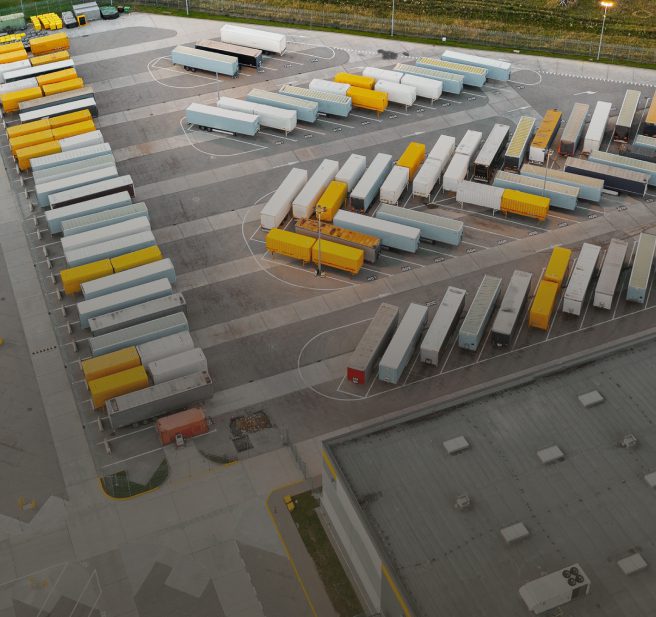
Another effective cost reduction strategy is delivery consolidation, the process of combining multiple smaller deliveries into larger loads. Fifty-eight percent of trucks moved with empty trailer space in 2024, up from 43% the year before, according to a recent study from Flock Freight and Drive Research. Every half-empty truck or van on the road represents wasted capacity and unnecessary costs.
When executed properly, consolidation turns many small, expensive stops into fewer, fuller, and cheaper trips, optimizing vehicle space while minimizing handling time. Fewer trips contribute to lower fuel and driver expenses. Consolidated deliveries also reduce congestion and dwell time in high-traffic zones, lowering carbon emissions. Delivery consolidation reduces wear on vehicles, optimizes driver scheduling, and can improve supplier relationships through more predictable delivery patterns.
Embrace Automation to Improve Productivity
Automation is redefining the logistics industry, from warehouse operations to delivery service, providing companies with several cost saving opportunities. Automation reduces manual labor, paperwork, and repetitive tasks, saving both time and money. Automation also enhances reliability. By eliminating manual entry errors and improving process speed, logistics teams can deliver faster, more accurately, and at a lower cost. From automated dispatching to warehouse robotics and mobile apps, automation eliminates physically-demanding tasks, enhances accuracy, and boosts efficiency. Companies are increasingly implementing automation in both warehouses and delivery operations in order to enhance productivity, lower costs, and improve delivery performance.
Invest in Delivery Management Software for End-to-End Visibility
Delivery management software is the backbone of efficient logistics operations, enabling companies to automate workflows, enhance visibility, and make data-driven decisions in real time. A robust delivery management system centralizes all key delivery processes, including order tracking, driver assignment, route optimization, proof of delivery, and performance analytics. Manual dispatching is time-consuming and error-prone. By replacing manual scheduling and paperwork with intelligent automation, companies can dramatically reduce errors, delays, and administrative costs.
Delivery management systems allow managers to track every delivery from the warehouse to the customer. This real-time visibility helps identify bottlenecks, delays, or errors before they impact delivery service. Delivery management software can also collect data across every stage of the delivery process. Managers can analyze delivery times, driver performance, and order accuracy to make informed decisions that reduce costs while maintaining service quality. Real-time dashboards and reports can help businesses refine routes, improve load balancing, and optimize delivery schedules.
Reducing logistics costs is about working smarter through optimization, consolidation, technology, and automation. By focusing on these strategies, companies can achieve substantial cost reductions while elevating operational excellence and customer satisfaction.
For more information about how our delivery management solution can help you manage your delivery operations more efficiently, please contact us.