
Orchestration & Rule Engine
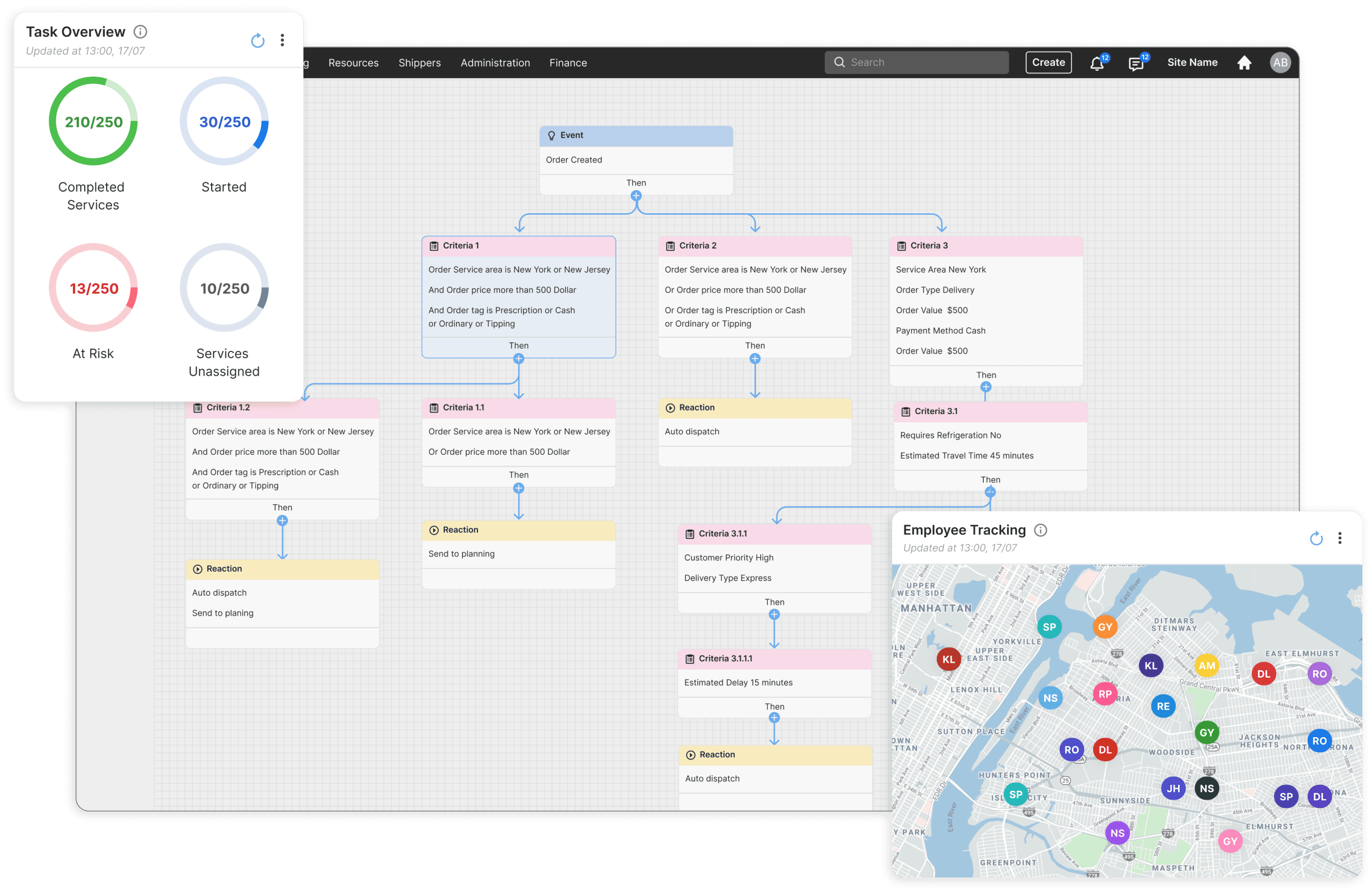
Plans, coordinates, and executes end-to-end delivery operations across orders, resources, and routes. Orchestrates scheduling, dispatching, real-time execution, and exception handling.
Orchestration
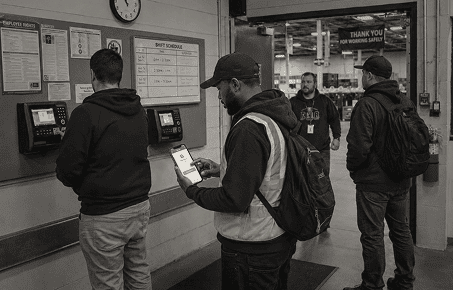
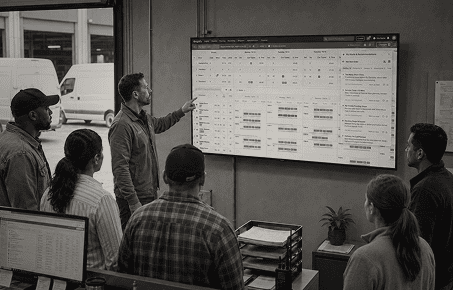
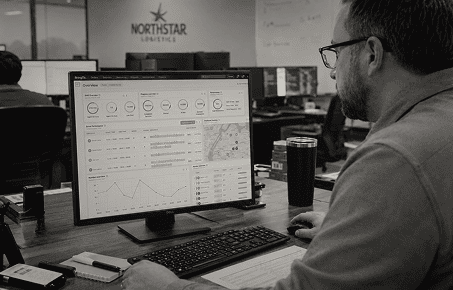
Coordinates people, systems, and workflows in real time to ensure seamless execution. Automatically aligns plans, decisions, and actions across operations while adapting dynamically to changes.



Internal &
3PL Rule Engine
Automatically select internal resources or
3PLs based on cost, speed, availability, and SLAs.
Multi-Resource & 3PL Selection Rules
Evaluate internal resources and external 3PLs using unified rules for eligibility, availability, and coverage.
Cost-Based Optimization
Automatically select the lowest-cost resource or 3PL based on rates, fees, distance, and compensation rules.
Speed-Based Optimization
Prioritize resources based on ETA, proximity, traffic, capacity, and service windows to minimize delivery time.
Cost vs. Speed Tradeoff Rules
Balance cheapest vs. fastest using configurable thresholds, priorities, and business policies.
Fallback & Escalation Logic
Automatically reroute work to alternative resources or 3PLs when preferred options are unavailable or fail.
FAQs
BringOz can apply rules for assignments, routing, prioritization, eligibility, capacity, SLAs, geography, workflows, approvals, and exceptions.
Yes. Rules can be customized by business unit, territory, customer, order type, service, resource, or other operational attributes.
Yes. Plans, assignments, and workflows can be validated against configured rules before work begins.
Yes. Rules can trigger alerts, assignments, escalations, workflow steps, replanning, or other automated actions.
It applies consistent business logic automatically, reducing repetitive decisions and improving execution consistency.
Yes. Rules can act on operational data received from ERP, CRM, WMS, HR, telematics, and other integrated systems.
Many operational rules and parameters can be configured to adapt workflows without redesigning the entire solution.
Permissions, controlled configuration, and auditability help organizations manage who can change operational logic.
Yes. Organizations can combine automation with authorized human intervention for exceptions and edge cases.
It improves consistency, automation, compliance, scalability, and the ability to adapt operations as business needs change.
Curious about
pricing?
BringOz pricing depends on several factors. To provide an accurate quote, please complete the form and we’ll connect you with the right expert shortly.