
Permissions, Governance and Configuration
Centralize permissions, governance, and configuration to control access, enforce policies, and ensure consistent system behavior across the organization.









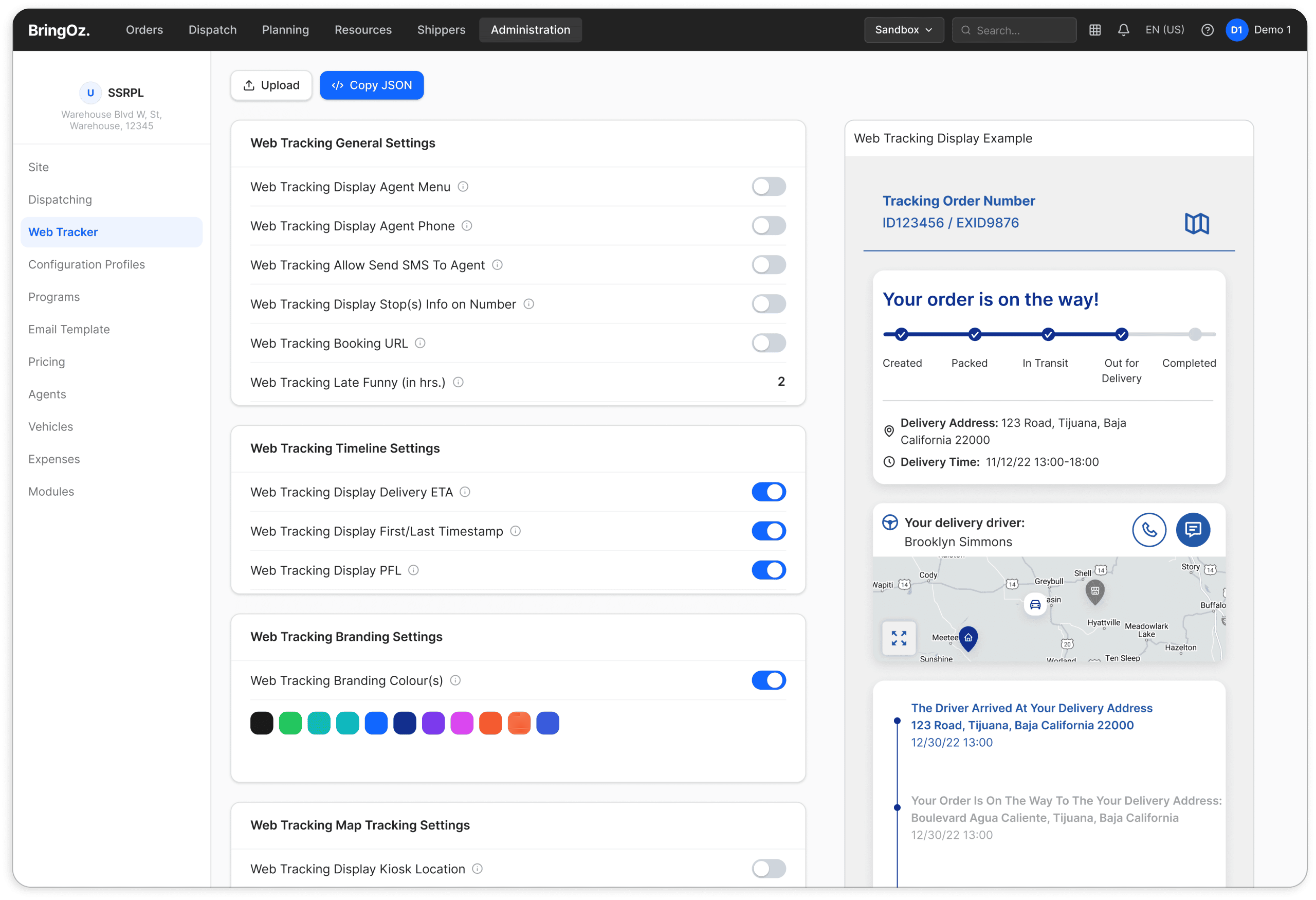
Configuration Foundations
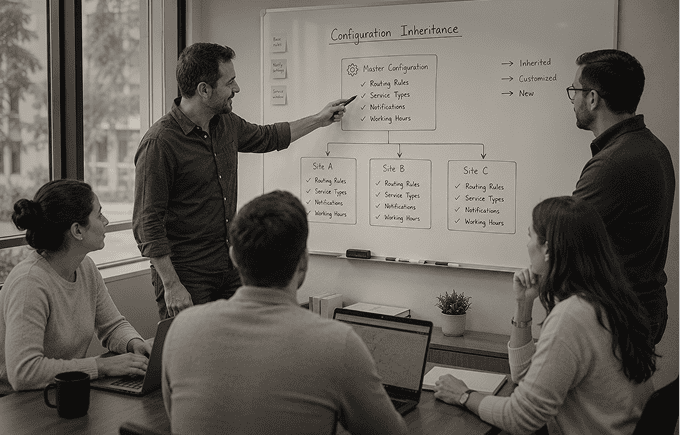
Central Configuration Framework
A single control layer that governs platform behavior for every customer, region, and use case.
Entity-Based Configuration Control
Configure behavior by customer, region, or entity type, so each one runs on the right settings.
Hierarchical Defaults & Overrides
Inherit settings from higher levels, with controlled overrides where local flexibility is needed.
Effective Date & Change Scheduling
Schedule configuration changes to take effect on set dates, so updates roll out exactly as planned.
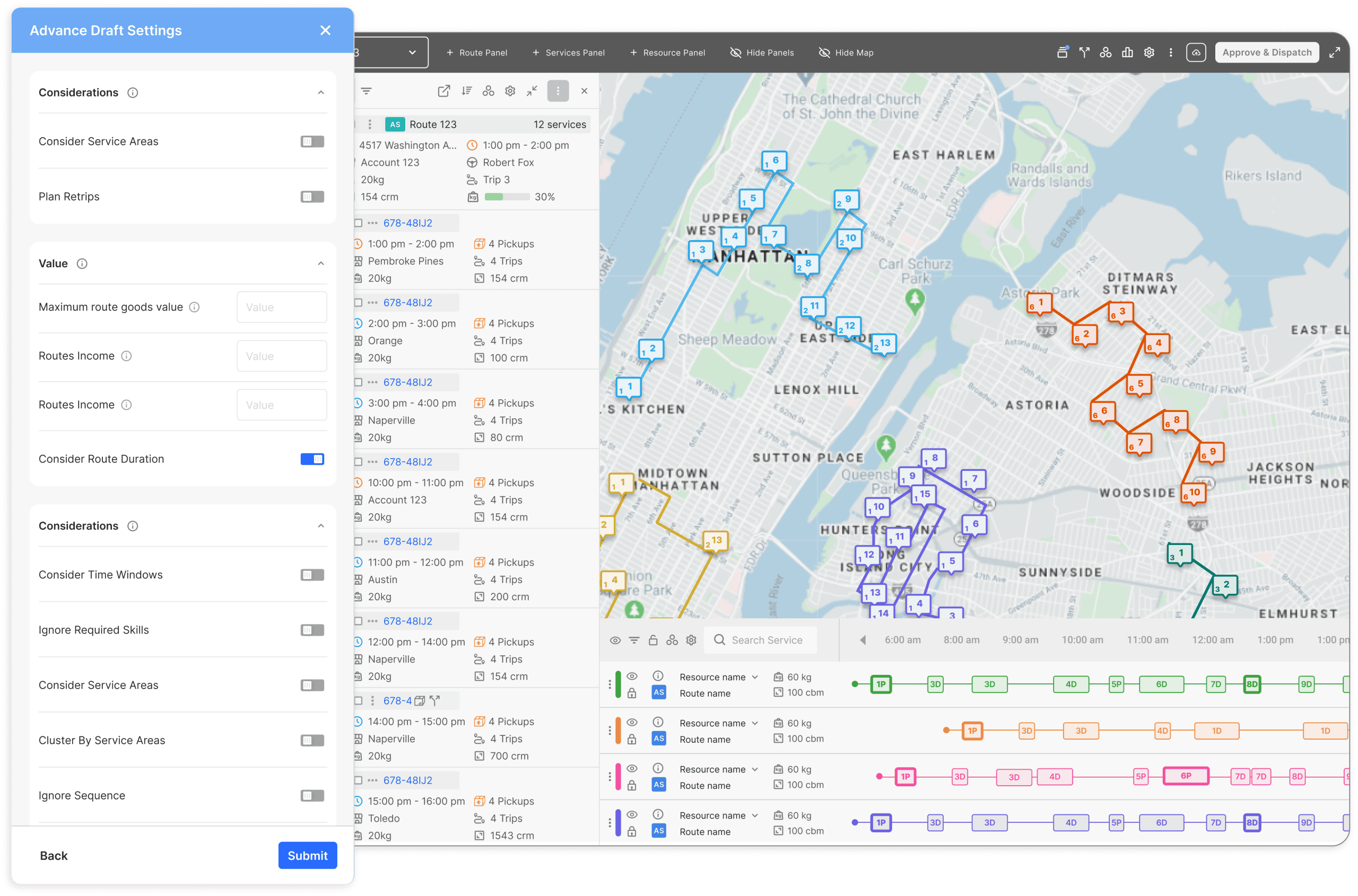
Planning, Scheduling & Execution Configuration
Planning & Scheduling Parameters
Configure planning logic, priorities, and constraints to tailor optimization to your operation.
Routing & Optimization Rules
Define routing behavior and optimization parameters so routes reflect your service and cost priorities.
Execution Workflow Configuration
Control execution steps, validations, and workflows so every job is carried out the way you define it.
Rescheduling & Replanning Policies
Define how plans adapt to changes, including when and how rescheduling and replanning take place.
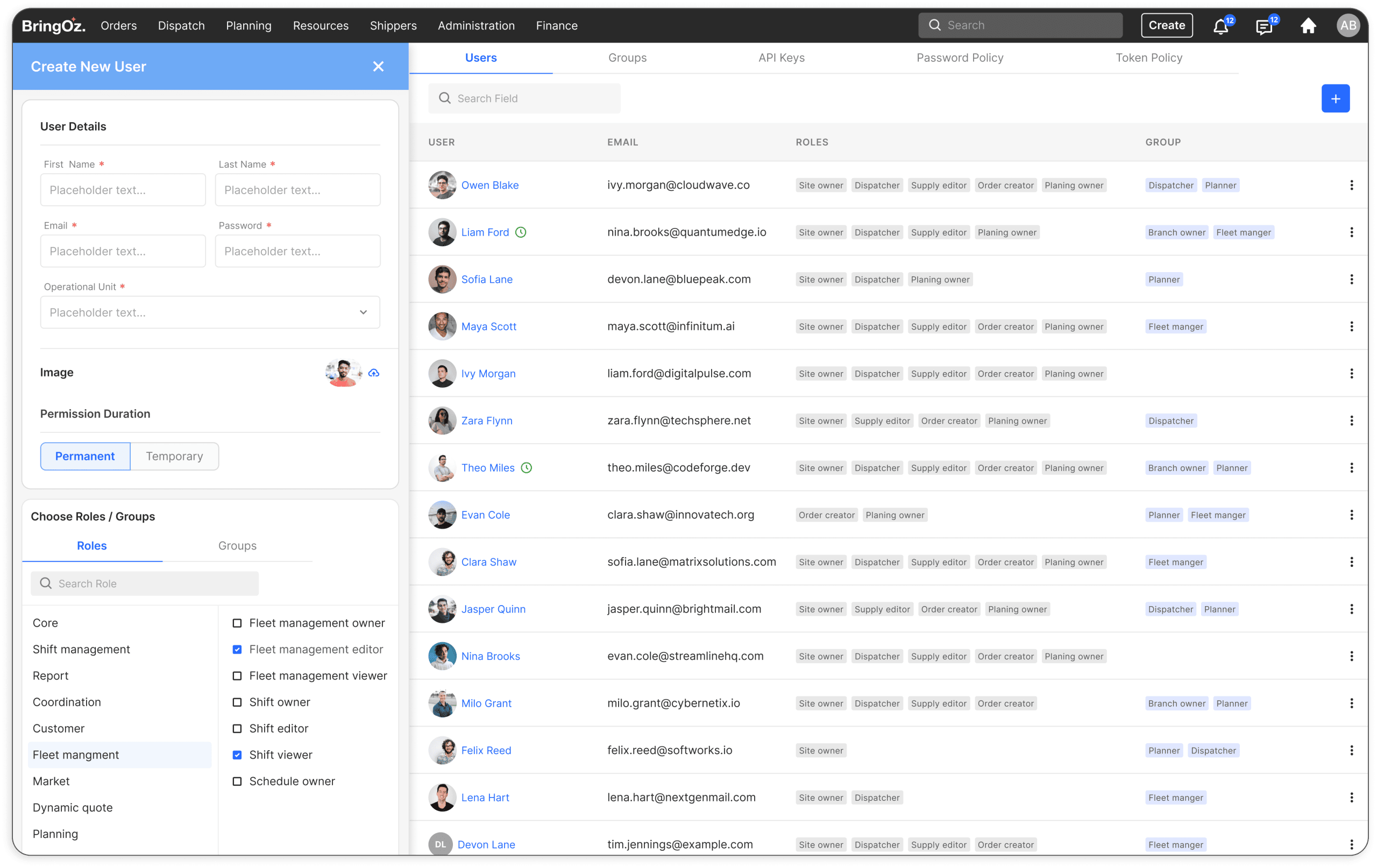
User, Role & Access Configuration
Role-Based Configuration Access
Control system configuration access by role and responsibility.
User-Level Configuration Overrides
Apply specific configuration overrides for individual users when needed.
Approval-Based Configuration Changes
Enforce required approvals for sensitive configuration changes so nothing gets lost.
Organizational & Regional Segmentation
Segment access and configuration by organization, region, or unit.



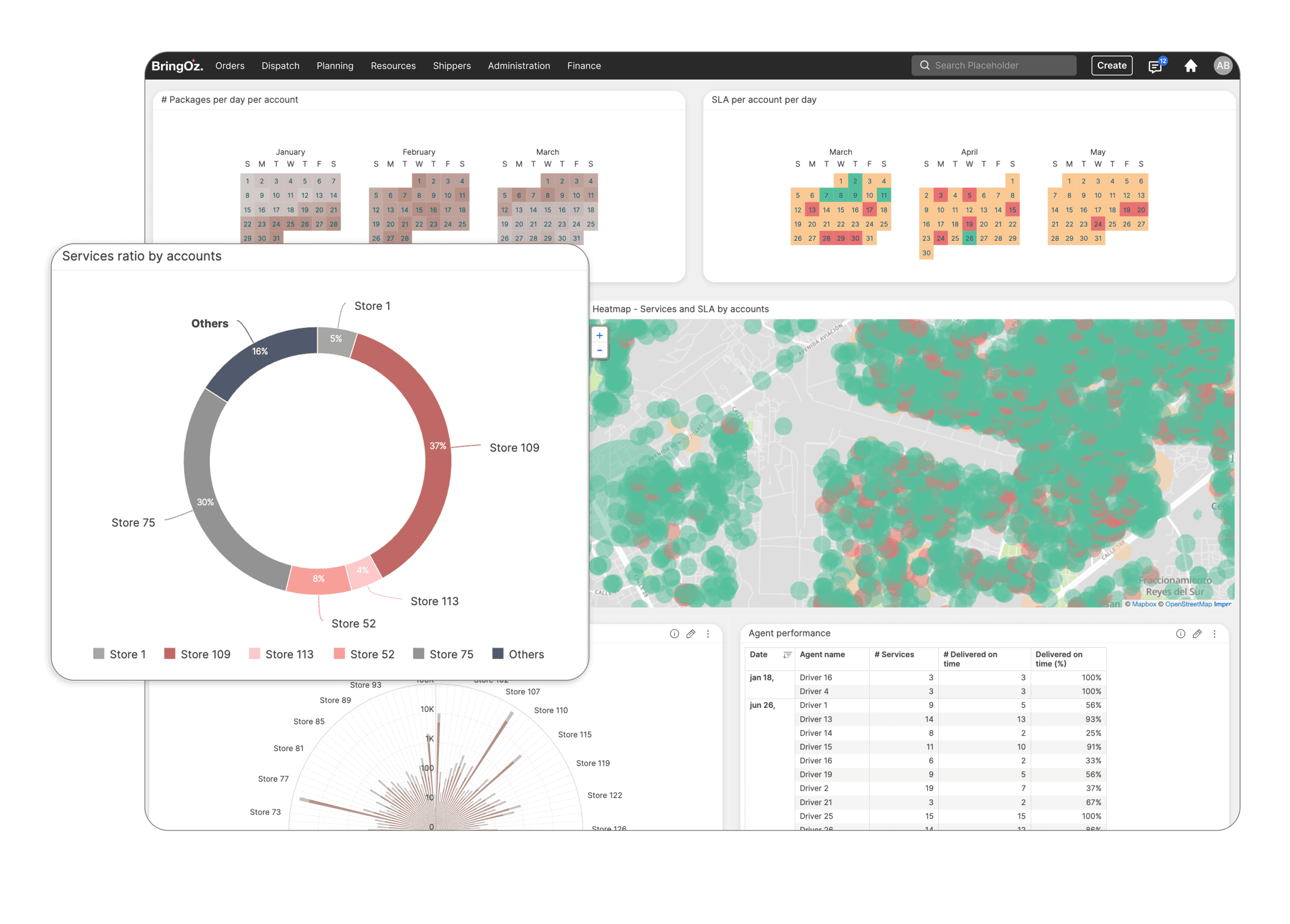
Analytics & Optimization Configuration
KPI & Metric Configuration
Define KPIs, thresholds, and measurement logic.
Alert & Notification Configuration
Configure alerts, triggers, and notification channels.
Optimization Objectives
Set and tune optimization goals and trade-offs.
AI Model & Signal Tuning
Control AI inputs, weights, and constraints.
FAQs
BringOz uses roles, permissions, organizational structures, rules, and workflows to control who can view, change, approve, and execute work.
Yes. Permissions can be configured by organizational level, territory, team, role, function, or other operational scope.
Yes. Central policies can coexist with regional or local configuration where operational flexibility is required.
Actions, changes, approvals, and key operational decisions can be recorded through audit trails for traceability.
Yes. Governance rules and workflows can require specific approvals, validations, or actions before work proceeds.
BringOz can use connected data and workflows to support consistent operational controls across the broader technology ecosystem.
Standardized structures and controls help organizations maintain consistency as regions, teams, workflows, and volumes expand.
Yes. Override rights can be limited to authorized roles and managed through configurable permissions and governance policies.
Enterprise security, role-based access, data controls, and auditability help protect operational information.
It improves accountability, consistency, compliance, control, and confidence across complex enterprise operations.
Curious about
pricing?
BringOz pricing depends on several factors. To provide an accurate quote, please complete the form and we’ll connect you with the right expert shortly.