Supply chain optimization includes strategically positioning inventory, balancing facility-to-customer mapping, and forecasting capacity needs. When properly implemented, it places the right stock in the right location while keeping costs optimized. However, macro-level network plans cannot account for real-world disruptions, such as closed roads, urgent delivery deadlines, or unavailable customers. This guide outlines the scope of supply chain optimization, defines where last-mile execution steps in, and helps identify which area requires immediate attention.
Key Takeaways
- Supply chain optimization determines inventory positioning, stock levels, and network flow over a weeks-to-months timeframe.
- Operating within an agile, short-term timeframe of hours and minutes, last-mile execution manages day-to-day operations, including routing, driver management, dispatching, exception handling, and proof of delivery.
- Supply chain optimization focuses on high-level efficiency and cost-effective planning, while last-mile execution prioritizes speed, customer satisfaction, and real-time flexibility.
- Last-mile delivery disruptions directly impact the end-customer experience, making real-time visibility and adaptive dispatching essential.
- Investing in both optimization and execution ensures strategic planning is supported by real-time delivery performance.
What is supply chain optimization?
Supply chain optimization focuses on enhancing the operational design, planning, and performance of a supply chain network. Its goal is to reach service performance targets while minimizing operational costs and risks. Key strategic areas include inventory management, network structure, product sourcing, production scheduling, and transportation strategy.
As supply chain costs continue to rise, companies must thoroughly assess their network strategies. Long-term network design initiatives extend across multi-year timeframes, while demand and supply planning operate on weekly or monthly schedules. Regular review cycles keep inventory targets aligned, generating an operational roadmap that specifies optimal stock levels, placement, and delivery timing.
What does supply chain optimization software do?
Supply chain optimization software turns those decisions into models that can be tested and rerun. Typical capabilities include:
- Network design: determining facility locations, counts, and customer allocation strategies.
- Demand and supply planning: aligning procurement and production schedules with demand forecasts.
- Inventory optimization: balancing carrying costs against service metrics to establish ideal regional stock levels.
- Transportation planning: selecting optimal transit modes, lanes, and carriers between facilities.
What is last-mile execution?
Last-mile execution focuses on completing daily deliveries directly from the final hub to the end customer. Key components include dispatching, route optimization, driver management, real-time tracking, exception handling, and proof-of-delivery capture. The scale of operation remains massive. According to Pitney Bowes’ Parcel Shipping Index, total parcel volume reached 23.1 billion parcel shipments across the US in 2025, marking a 3.3% year-over-year increase, with projections anticipating expansion to 31 billion parcels by 2031.
Operating on a shift-based timeframe, last-mile execution centers on individual delivery stops rather than long-term strategic plans. Its primary objective is to maintain daily delivery schedules despite unavoidable real-time challenges, including late truck arrivals, urgent orders, closed loading docks, or missed delivery windows.
Supply chain optimization vs. last-mile execution: what is the difference?
Supply chain optimization decides what the network should do. Last-mile execution makes sure the deliveries happen. The table shows how far apart they sit.
| Dimension | Supply chain optimization | Last-mile execution |
| Question it answers | Where should inventory and capacity be? | Which driver delivers which order, in what order, right now? |
| Time horizon | Weeks, months, years | Hours and minutes |
| Unit of work | SKU, facility, lane | Order, stop, driver |
| Main inputs | Forecasts, costs, capacities, lead times | Today’s orders, time windows, vehicle and driver status, traffic |
| Output | A plan and targets | Routes, assignments, ETAs, proof of delivery |
| Typical owner | Supply chain planning, S&OP | Delivery operations, dispatchers |
| Success measure | Total cost, service level, inventory turns | On-time delivery, cost per delivery, failed attempts |
| When reality changes | Corrected in the next planning cycle | Corrected during the shift |
How do supply chain optimization and last-mile execution work together?
Strategic planning and real-time execution form a continuous operational feedback loop. Long-term strategy creates the framework for daily operations, while performance metrics captured during execution continuously refine future optimization models. In practice, however, these two core functions are rarely integrated into a single system, creating vulnerabilities in data transfer. A recent supply chain study from the Institute for Supply Management and Amazon Business revealed that 65% of organizations still rely on manual reporting to gather supply chain data, limiting operational agility and end-to-end visibility.
Without continuous feedback loops built on actual stop-level data, strategic planning teams risk optimizing networks against outdated assumptions that drivers stopped meeting months ago. By capturing detailed operational metrics in real time during daily workflows, delivery management platforms equipped with centralized visibility can effectively link long-term strategy with daily operations.
The step-by-step synergy between strategic optimization and tactical execution unfolds across five main stages:
- The plan sets the frame. Strategic supply chain planning establishes foundational constraints, including inventory positioning across hubs, delivery service windows, geographic territory boundaries, vehicle types, and overall fleet capacity.
- Execution builds the day. Dispatchers take real-time order flows and dynamically build optimal daily routes, balancing delivery time windows, vehicle capacity constraints, driver skills, and driver hour regulations.
- Execution absorbs change. Urgent orders, delays and cancellations are handled by re-optimizing routes and reassigning tasks automatically to maintain service level agreements.
- Execution reports what happened. On-the-ground operational metrics are systematically recorded stop-by-stop, capturing actual service times, failed delivery attempts, true cost per stop, dynamic ETAs, and precise proof-of-delivery milestones.
- The next plan uses real data. Planners ingest granular, stop-level field metrics back into top-level models, replacing historical benchmarks and static assumptions with dynamic, real-world constraints.
Where should you invest first?
Target your technology investments based on your current operational pain points. Companies often purchase planning tools to solve execution challenges, or vice versa. To determine where to direct resources first, operations leaders must analyze existing delivery symptoms against their underlying root cause.
| What you see | Where the problem usually sits | First place to look |
| Stockouts or excess inventory at distribution centers | Supply chain optimization | Demand planning and inventory targets |
| Product is in the building, but deliveries still arrive late | Last-mile execution | Dispatch, routing and time window handling |
| Urgent orders disrupt the whole day | Last-mile execution | Priority rules and live re-optimization |
| Customer service spends the day answering “where is my order?” | Last-mile execution | Live tracking and customer notifications |
| Cost per delivery rises while volume holds steady | Both | Route density first, then territory and depot design |
| Plans look good on paper but drivers never match them | The loop between them | Plan versus actual reporting |
On the execution side, initial operational improvements usually stem from route optimization and streamlined dispatching. On the planning front, logistics optimization serves as the critical bridge connecting strategic network design to daily delivery routing.
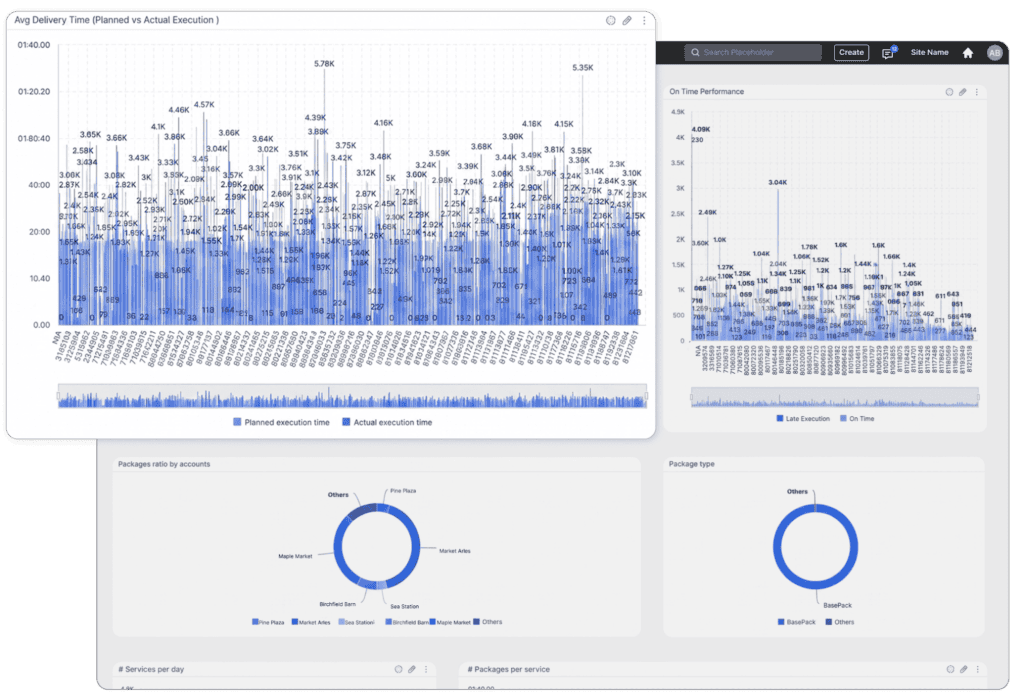
Ready to streamline execution? See how real-time dispatch dashboards connect urgent orders, live routing, and delivery-level visibility.
Frequently asked questions
Supply chain optimization involves arranging your supply chain network, inventory and transportation so you meet service targets at the lowest total cost and risk. It decides where stock should sit, how much to hold and how goods should flow. It is mostly done ahead of time, through planning cycles and models.
Although last-mile delivery is a component of the broader supply chain, it is usually managed separately. Supply chain optimization establishes macro parameters, such as fleet sizing and delivery schedules. Last-mile execution oversees daily operational delivery workflows and real-time adjustments that planning tools are not equipped to manage.
While supply chain optimization focuses on broader network variables like sourcing, production, and inventory placement, logistics optimization specifically targets transportation operations, creating executable plans for vehicles, drivers, and deliveries that account for real-world operational constraints.
Not usually. Supply chain optimization software works on forecasts, facilities and lanes over weeks or months. Last-mile delivery needs dispatch, live route changes, driver apps and proof of delivery during the shift. Most operations run a separate execution platform and connect the two.
Last-mile execution captures actual operational metrics, such as precise service times, actual route duration, and failed delivery rates. Feeding this data back into supply chain optimization models refines future planning assumptions with real-world accuracy.