
Built for Industrial Distribution Logistics & Field Operations
Optimize industrial deliveries, transportation coordination, field workforce scheduling, customer appointments, and operational execution in real time.
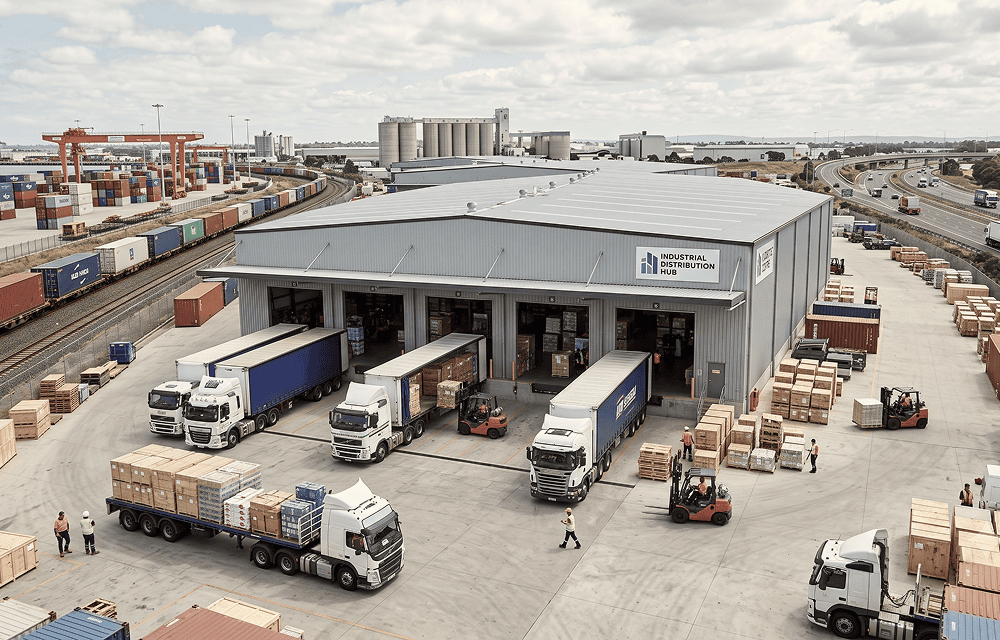
Industrial distribution organizations operate highly complex logistics and operational environments where transportation coordination, delivery execution, field workforce management, customer responsiveness, and operational visibility directly impact service levels, operational efficiency, and profitability. Managing industrial deliveries, transportation fleets, field service teams, subcontractors, customer appointments, route planning, warehouse coordination, and service execution creates significant operational complexity. BringOz helps industrial distribution organizations synchronize logistics operations, transportation workflows, field coordination, and customer service execution within one centralized operational platform.
Industrial Distribution Operational Challenges
-

Disconnected Logistics & Reactive Dispatch
Deliveries, dispatching, and customer updates run across spreadsheets, calls, and disconnected systems, keeping coordination reactive and adding manual asset allocation friction.
-
Complex Delivery & Workforce Coordination
Coordinating deliveries, providers, field teams, and subcontractors creates B2B logistics operational friction, last mile delivery challenges, and low fleet utilization.
-
Limited Real-Time Operational Visibility
Managers lack centralized visibility into deliveries, field activity, and SLA performance, with supply chain bottlenecks hidden by fragmented industrial cross-dock tracking.
-
Customer Service & Delivery Accuracy Demands
Customers expect accurate ETAs, proactive communication, and rapid issue resolution, without manufacturing transport routing errors across industrial distribution networks.
How BringOz Transforms Industrial Distribution Operations
-
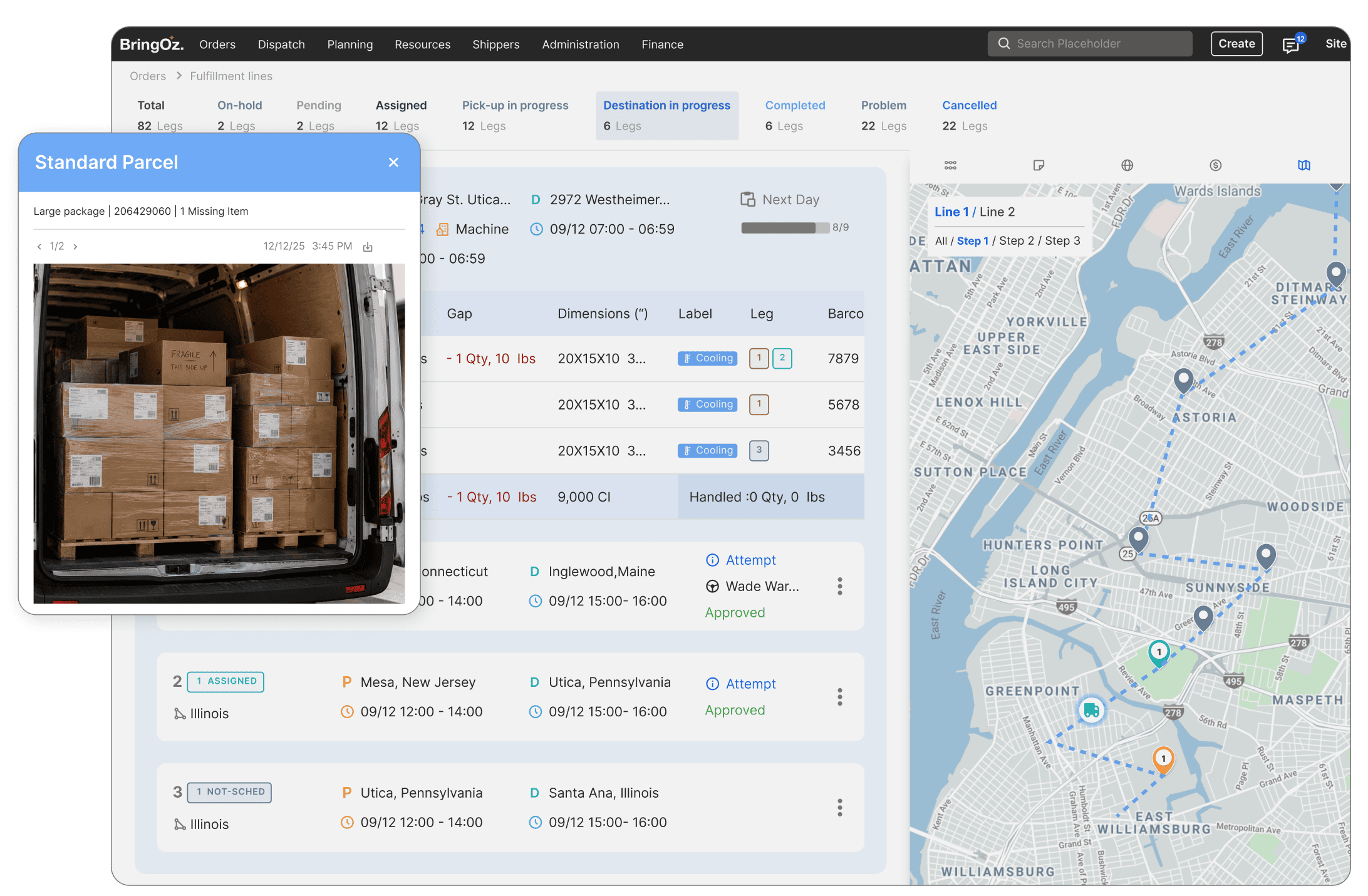
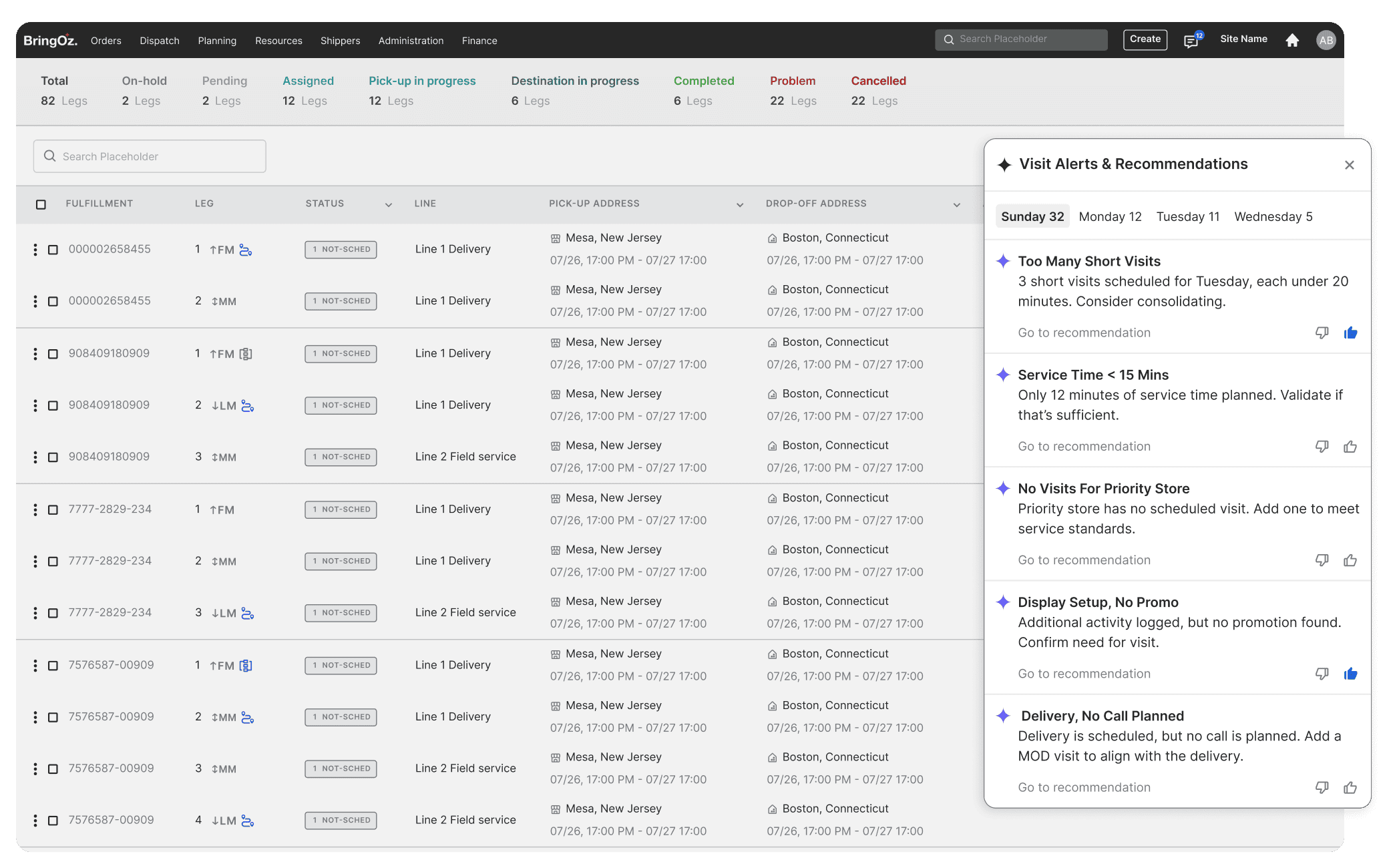
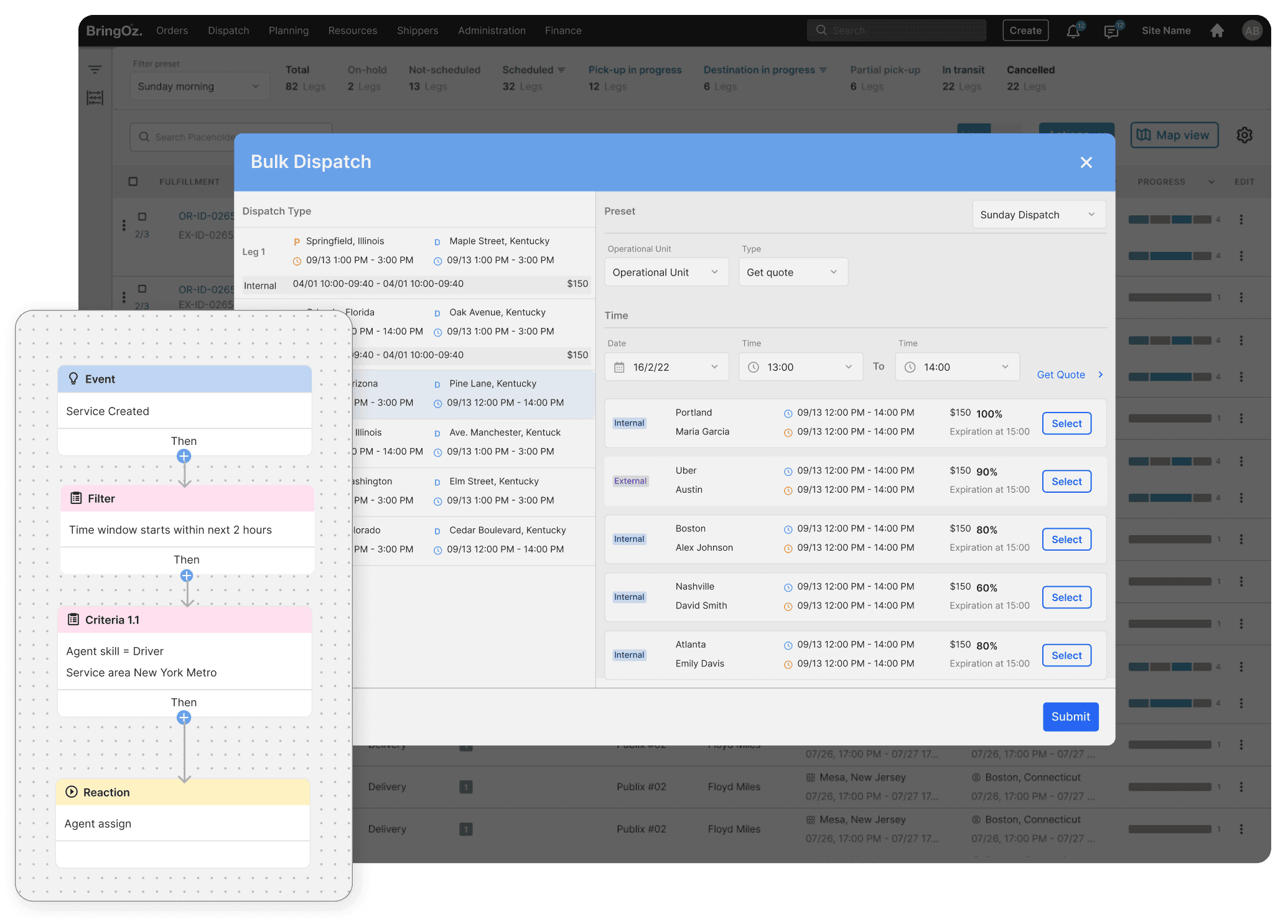
Centralize industrial deliveries, transportation workflows, workforce coordination, dispatching, customer communication, and operational visibility into one intelligent platform.
-
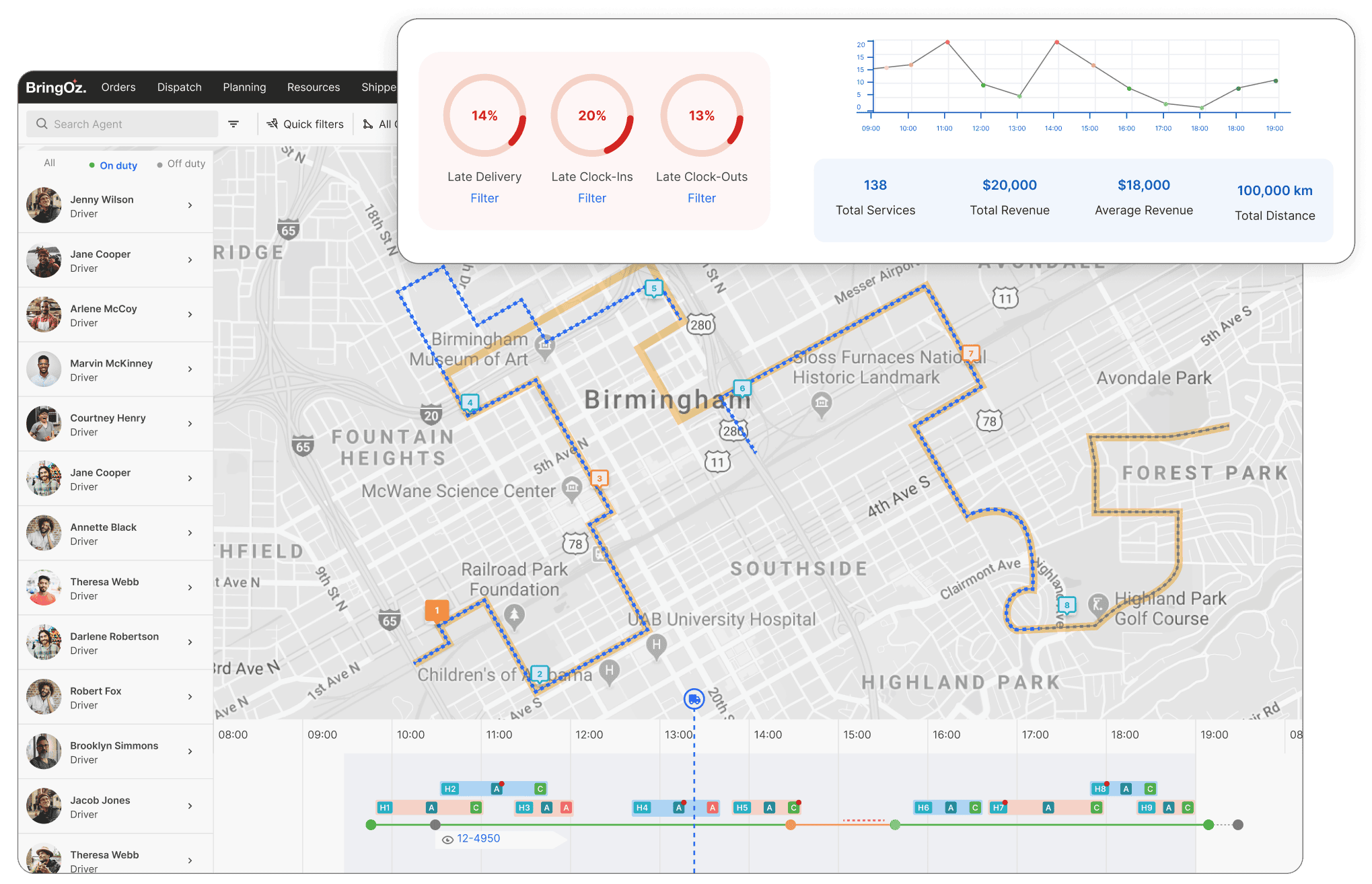
Continuously optimize deliveries, transportation scheduling, workforce assignments, route sequencing, workload balancing, and operational responsiveness in real time.
-
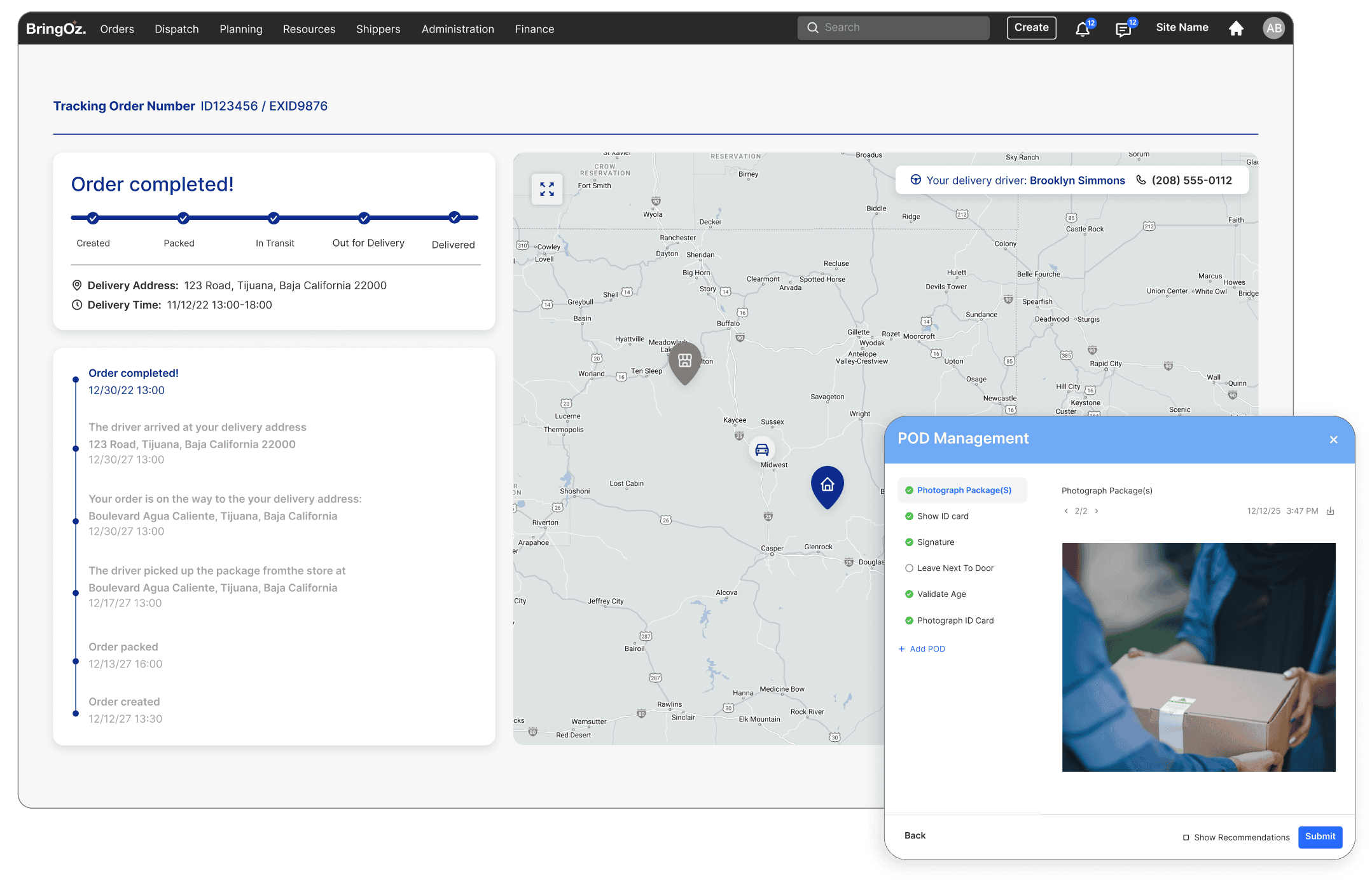
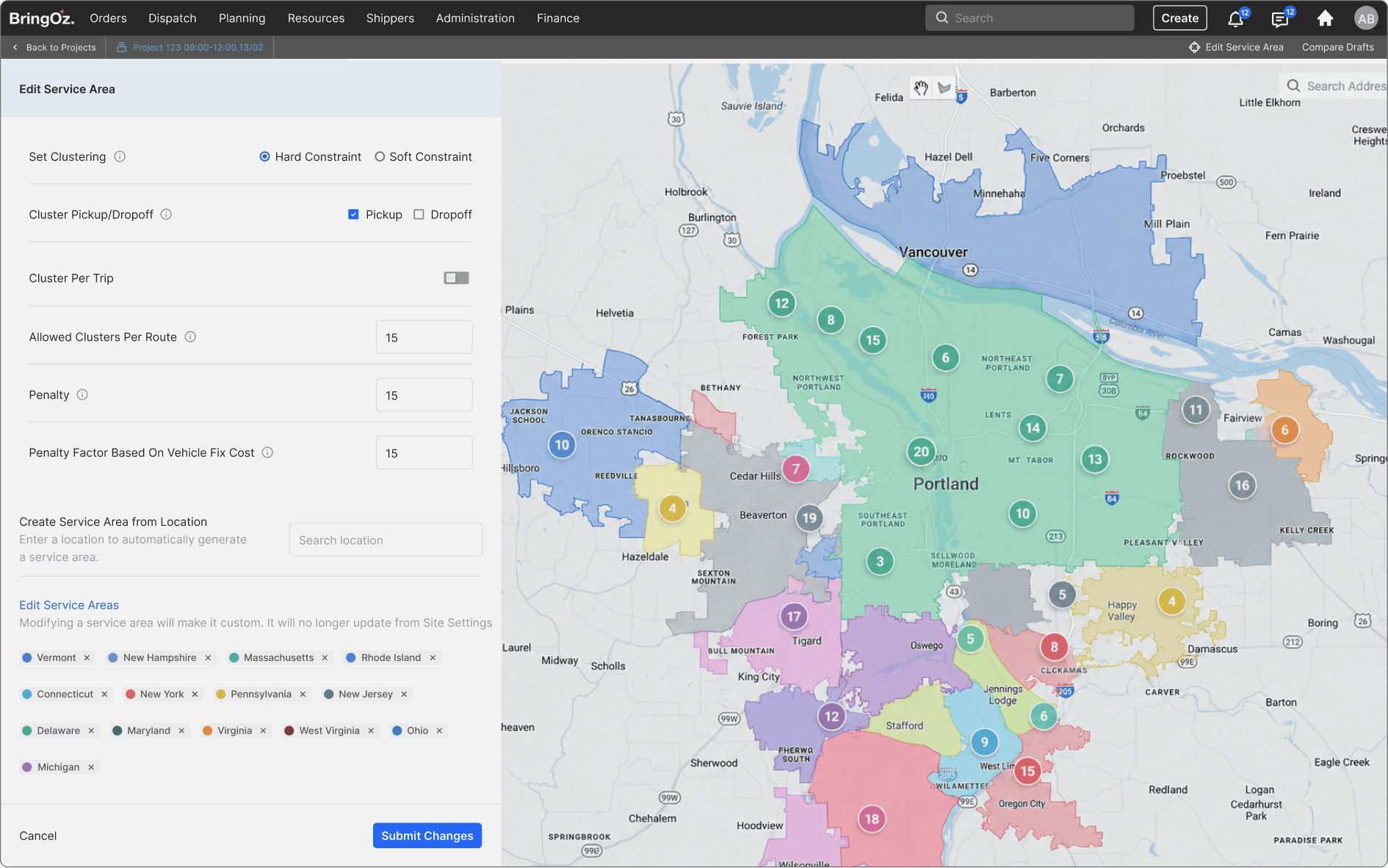
Gain centralized live visibility into deliveries, drivers, transportation workflows, field teams, customer appointments, SLA performance, and operational bottlenecks from one command center.
-
Automate delivery scheduling, transportation dispatching, workforce coordination, rerouting, customer notifications, proof-of-delivery workflows, and operational escalations to reduce manual coordination.
-
Improve ETA accuracy, delivery transparency, proactive notifications, live updates, appointment coordination, and customer responsiveness throughout the operational lifecycle.
-
Support industrial deliveries, transportation fleets, field service operations, subcontractor coordination, warehouse workflows, and regional operations through configurable automation and orchestration workflows.
Built to Optimize Industrial Distribution Logistics, Transportation & Field Operations Performance

Better Synchronization Between Logistics & Field Operations
Seamlessly coordinate industrial deliveries, transportation workflows, field workforce scheduling, subcontractor coordination, customer appointments, and operational execution within one connected flow.

Reduced Transportation & Operational Costs
Lower delivery delays, overtime, route inefficiencies, repeat visits, manual coordination efforts, and operational disruptions across logistics and field operations.

Real-Time Delivery & Operational Visibility
Gain centralized visibility into deliveries, transportation status, drivers, field teams, customer updates and messaging, SLA adherence, and operational execution performance.

Smarter Scheduling & Workforce Optimization
Improve fleet utilization, workload balancing, transportation efficiency, workforce coordination, route optimization, and operational responsiveness in real time from one platform.

Improved Dispatch & Workforce Productivity
Automate dispatching workflows, reduce manual coordination, optimize driver and field workforce assignments, and constantly improve execution consistency across operations.

Better Customer Service & Delivery Experience
Deliver accurate ETAs, synchronized delivery coordination, proactive notifications, live operational updates, proof-of-delivery workflows, and faster issue resolution throughout the customer lifecycle.
From Disconnected Industrial Distribution Operations to Intelligent Real-Time Logistics Orchestration
Before
Industrial distribution organizations rely on disconnected scheduling systems, spreadsheets, manual dispatching workflows, and reactive coordination between logistics and field operations
Operations managers spend significant time coordinating deliveries, transportation providers, warehouse workflows, field workforce scheduling, customer updates, and escalations manually
Transportation and workforce operations remain static and difficult to synchronize dynamically based on delays, fleet availability, traffic, customer requests, and operational changes
Limited visibility into deliveries, transportation workflows, workforce activity, customer appointments, SLA risks, and communication creates silos and reactive management
Customers experience delayed deliveries, inaccurate ETAs, inconsistent communication, failed appointments, and limited operational transparency
Inefficient routing, overtime, low fleet utilization, repeat visits, workforce scheduling conflicts, and fragmented workflows increase operational costs and reduce service efficiency
After
Centralize industrial delivery coordination, transportation orchestration, workforce scheduling, customer communication, and operational visibility into one intelligent platform
AI-driven workflows continuously optimize deliveries, workforce assignments, transportation scheduling, route sequencing, workload balancing, and operational responsiveness in real time
Managers gain centralized visibility into deliveries, transportation workflows, field workforce activity, SLA performance, customer communication, and bottlenecks from one command center
Operational disruptions, delays, failed deliveries, urgent customer requests, and workforce conflicts are proactively identified and resolved automatically through intelligent orchestration
Drivers and field teams receive live schedule updates, routing instructions, customer details, proof workflows, and notifications automatically
Industrial distribution organizations improve transportation efficiency, operational scalability, workforce productivity, customer responsiveness, and service performance
Recent Posts

API-Driven Logistics: What It Is and Why It Matters
Logistics networks are becoming increasingly digitized, and at the heart of this transformation lies application programming interfaces (APIs), digital interfaces that allow software applications to communicate with one another. API-driven logistics refers to using APIs to connect multiple logistics and supply chain systems so they can exchange data automatically and operate as a unified network.
How Digital-First Logistics Companies Are Outpacing Their Competitors
Logistics is no longer just about moving goods, it’s about managing complex delivery networks with speed and precision. Same-day and on-demand delivery options are no longer nice-to-haves, they’re expected. These demands are pushing companies to rethink how they operate. In this high-pressure environment, digital-first companies are pulling ahead. They’re not just adopting new tools, they’re
How Change Management Improves Delivery Performance
Delivery operations are under constant pressure. Customers expect faster fulfillment, businesses face growing competition, and margins continue to tighten. New technologies, expanding delivery models, and evolving customer expectations are driving innovation, but implementing those innovations without a structured approach to change can be chaotic. Without structured change management, teams often experience a prolonged adjustment period
Curious about
pricing?
BringOz pricing depends on several factors. To provide an accurate quote, please complete the form and we’ll connect you with the right expert shortly.