Route optimization decides which stops go on which route, in what order and with which driver and vehicle. This guide explains how it works and what it changes in a delivery operation.
Key Takeaways
Route optimization chooses the most cost-effective routes for your fleet by weighing where customers are, when they want their deliveries, and which driver and vehicle fit each job. It cuts distance driven, fits more stops into each shift, and lets dispatchers re-plan when traffic or demand changes. This guide explains what route optimization does, how it affects delivery cost, and what to look for in route optimization software.
Managing last-mile deliveries is difficult without the right tools. Crowded streets and unexpected demand can hurt a delivery service that is not planned well. One of the most important tools for running a successful delivery operation is route optimization.
What is route optimization?
Route optimization decides which stops go on which route, in what order, and with which driver and vehicle, so that total cost is as low as possible. It does this by weighing three inputs at the same time:
- Where your customers are located.
- When they want to receive their deliveries.
- Which driver or vehicle is needed to do the job.
As deliveries get more complex, a spreadsheet cannot show where your customers are or when their deliveries will arrive. Automated route optimization takes an investment at the start and pays back over time through the cost and productivity gains below.
See BringOz plan and re-plan routes for your fleet. Book a demo.
How does route optimization lower delivery costs?
It shortens the distance each vehicle drives and improves vehicle utilization, which lowers labor and fuel cost per delivery. For any business making multiple deliveries every day, choosing the fastest, most cost-efficient route saves time, money and resources.
Cost pressure is real: a 2026 benchmark of more than 400 specialty retailers, reported by DC Velocity, found global logistics and fulfillment costs up by more than 20% over three years. Optimized routes plan the entire fleet in minutes, which reduces wages, driving time and fuel consumption per stop.
To measure the effect, compare cost per delivery and stops per route hour before and after you switch.
How does route optimization increase delivery efficiency?
It lets each driver complete more deliveries in a day by cutting driving hours and assigning every job to the right driver and vehicle. In practice that means:
- Fewer driving hours per route, so more deliveries fit in the same day.
- One central dashboard for routes, resources and delivery details, so your team can help customers quickly.
- Deliveries assigned by parameters such as driver experience, location and vehicle, so each job reaches the right driver.
- Delivery windows that prevent overbooking and are more convenient for customers.
Route optimization, dynamic routing and dispatch are related but different. The table below separates them.
| Term | What it decides | When it happens |
| Route planning | Which stops go on which route and in what sequence | Before the shift |
| Dynamic routing | How routes change when traffic, demand or exceptions appear | During the shift |
| Dispatch | Which driver or vehicle takes which job | Before and during the shift |
Want to see this on your own routes? Book a demo.
Can routes change while drivers are already out?
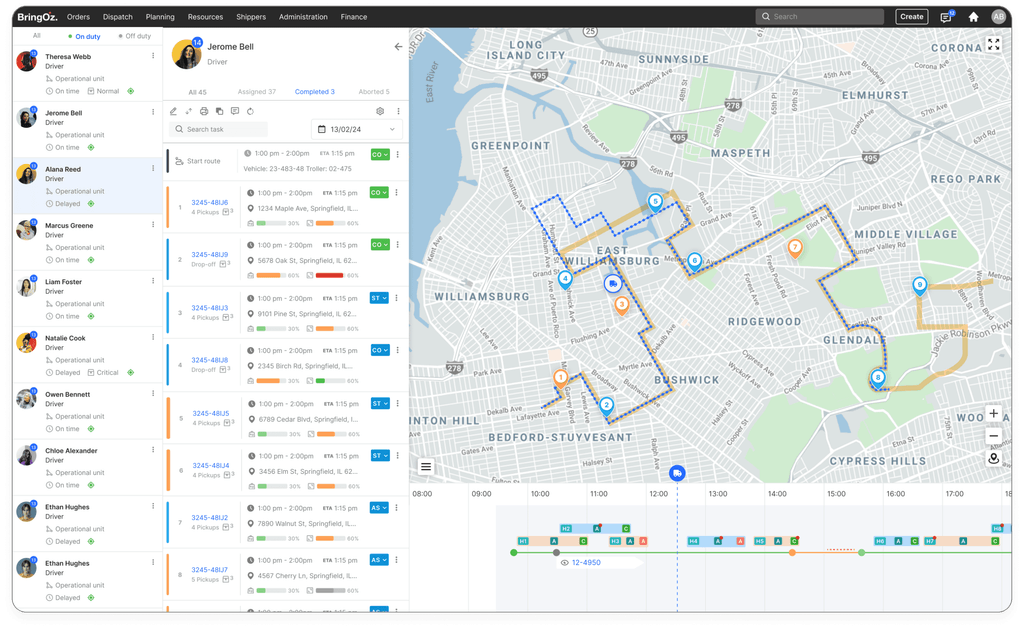
Yes. Route optimization technology takes real-time traffic and unexpected demand into account, so you can adapt to last-minute problems on the route. You can add extra stops for additional deliveries or returns, change orders, and reroute deliveries to match customer preferences while the driver is on the route.
Customers see this too: real-time ETA calculations with last-minute adjustments give them current information. Real-time fleet tracking and alerts, available through the control tower, give your team the same visibility.
Can you test a route plan before you commit to it?
Yes. Route optimization software can run several what-if scenarios and show route options by cost and available resources. Because the plan accounts for every parameter, there is less guesswork, and you can foresee problems and adjust routes before the day starts. This also helps you absorb changes in delivery demand, individual customer needs and business constraints.
Why on-time delivery depends on route optimization
A reliable system for on-time deliveries is key to fulfilling customer orders quickly and consistently. Optimizing routes for both on-demand and scheduled deliveries is a crucial part of that system. It helps you reduce costs, increase productivity and make full use of your resources, so you can manage last-mile delivery successfully.
Plan Your Fleet’s Routes with BringOz
Route optimization picks the lowest-cost routes by weighing customer locations, delivery windows, and the driver and vehicle each job needs. It cuts distance driven, fits more deliveries into each shift, and lets dispatchers re-plan when traffic or demand changes. BringOz combines route planning, dynamic re-routing and what-if scenario planning in one platform, so your team can plan the day, adjust it while drivers are out, and test a plan before it goes live.
Book a demo to see how BringOz would plan your fleet’s routes.
Frequently asked questions
What is the difference between route planning and route optimization?
Route planning builds a route. Route optimization chooses the routes that minimize total cost across all stops while respecting delivery time windows and the driver and vehicle each job needs.
Which factors does route optimization take into account?
Customer locations, requested delivery times, and the driver and vehicle needed for each job. It also accounts for real-time traffic and unexpected demand.
Can route optimization adjust routes after drivers have left?
Yes. Extra stops, returns and changed orders can be added to a route while the driver is on it, and the customer ETA updates with the change.
How do you measure the result of route optimization?
Track cost per delivery, stops per route hour and on-time rate, comparing a period before the change with a period after it.